The Offshore Renewable Energy (ORE) Catapult is leading a groundbreaking research and development team to transform the design and manufacture of steel onshore wind turbine towers – making them more efficient and sustainable.
The consortium, largely based in Wales, includes Tata Steel UK, RWE, Bute Energy, Hutchinson Engineering, and Ledwood, and the project has won £174,000 SMART Flexible Innovation Support from the Welsh Government.
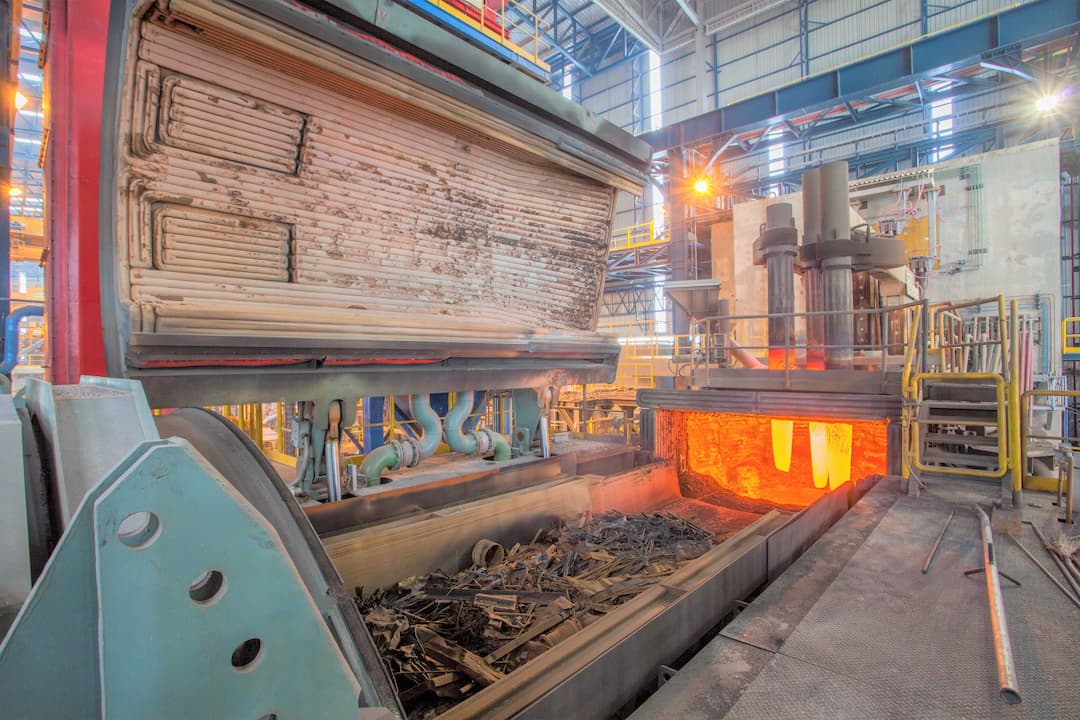
Most wind turbine towers currently built in the UK rely on imported thick steel plate for construction, creating a potential bottleneck for renewable energy projects. This initiative could change this, by developing a tower design that uses thin strip, coil based, low emission steel, produced in electric arc furnaces – enabling lighter, more efficient structures that could significantly cut costs.
Dr Cristina Garcia-Duffy, Director of Research and Engineering at ORE Catapult, said:
“This innovation represents a major step forward in wind turbine tower design, with the potential to significantly enhance technical performance while also delivering substantial economic and environmental benefits for Wales and the wider UK.
“By combining low emission steel with advanced engineering and design techniques, we are targeting meaningful reductions in both lifecycle costs and carbon emissions. This approach not only improves the sustainability of turbine infrastructure but also strengthens UK competitiveness in the sector.
“This partnership brings together some of the strongest capabilities in British engineering and industrial innovation. It reflects a shared commitment to supporting domestic steelmaking, building more resilient and localised supply chains, and creating high value employment opportunities across Wales and beyond.”
The steel wind turbine tower would be constructed using design methods widely used in the marine and aerospace sectors to create strong, lightweight structures. Crucially, the design would also meet current industry standards – creating a credible route to industrial adoption, with the ability to integrate with other existing turbine and foundation designs, including floating offshore wind structures as part of future project phases.
Rebecca Evans MS, Cabinet Secretary for Economy, Energy and Planning, in the Welsh Government, said:
“This investment demonstrates our commitment to building a greener, stronger Welsh economy. By backing homegrown innovation and locally produced low emission steel, we are helping to create high-value jobs, strengthen our supply chains, and position Wales at the forefront of the global offshore wind revolution. This is exactly the kind of bold, forward-thinking collaboration that will deliver real benefits for Welsh communities.”
Stephen Kinnock, MP for Aberafan Maesteg said:
“It is essential that we use more British and Welsh steel in offshore wind innovation. This research demonstrates how Wales and the UK can remain at the forefront of the transition to renewable energy. By decreasing reliance on imported steel we can bolster energy security, create economic growth, secure regional jobs, and support offshore wind deployment in the Celtic Sea and beyond.”
Tata Steel UK is the largest steel manufacturer in the UK, based in Port Talbot, South Wales.
Sumitesh Das, Director and Board Member, Tata Steel Research and Innovation Limited added:
“We are excited to participate in this project, along with our Business Development Teams at Tata Steel UK, to develop strip steel based designs for onshore wind turbines which would be a first of its kind. This innovation, if successful, would position the UK and Wales as a hub for innovation whilst supporting the entire supply chain to meet its emissions targets. As Tata Steel UK transitions to electric arc furnace steelmaking, our ambition is to ensure domestic supply chains capitalise on the growth of clean energy and help drive economic growth in the UK.”
The first phase of the project will look specifically at onshore tower design, the supply chain and commercial case for the solution. Learnings could also be applied to offshore wind turbines and floating wind in subsequent phases.
The proposed design could also be dismantled and recycled, creating a sustainable supply of steel for future production across a variety of industries.
Catryn Newton, Community Investment and Communications Director at Bute Energy, said:
“This is Welsh innovation, driving the circular economy in Wales. The chance to be a part of this exciting consortium speaks to Bute Energy’s mission to keep investment in Wales for the benefit of the economy, communities and the supply chain.
“If we get this right, we could see end of life turbines that have been helping to power homes and industry across Wales for the past 30 years, recycled and sent to the newer electric arc furnaces. The work of this group is exploring whether that scrap metal can be transformed into a material that could be used in the next generation turbine towers, helping to power Wales’ clean power future.”