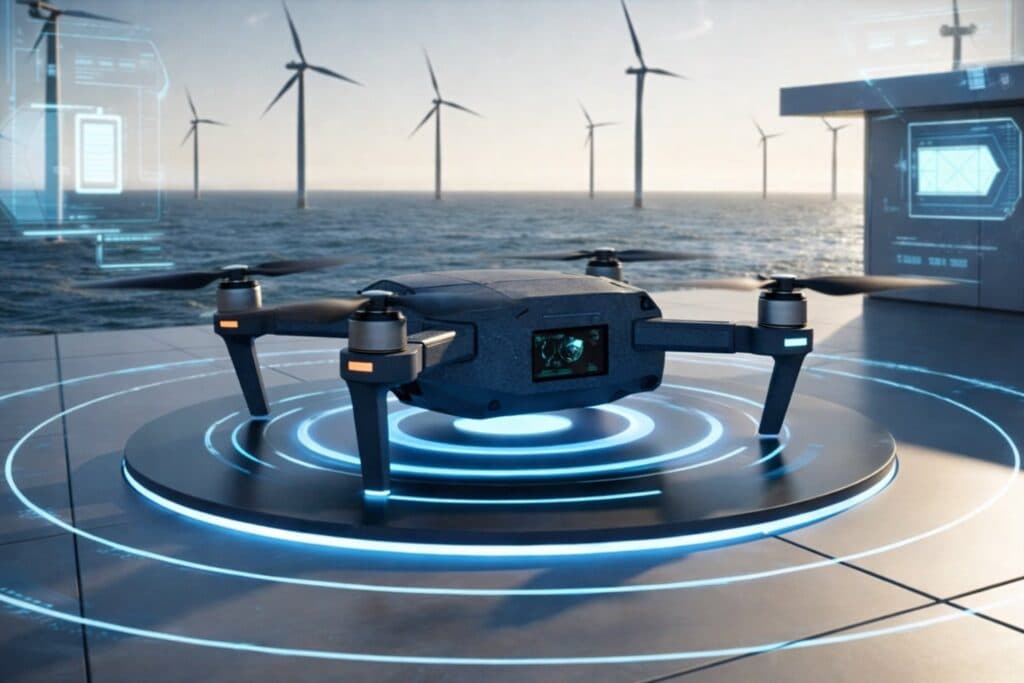
AmpiGo Charge designs and develops cutting-edge wireless charging solutions for drones, electric vehicles, mobile devices, maritime vessels, and space applications.
Within the offshore wind industry, their unique Charge technology is suitable for wireless charging of Unmanned Aerial Vehicles (UAVs) and Autonomous Underwater Vehicles (AUVs), used for deep water wind farm inspection, maintenance and surveillance.
Working with ORE Catapult
When AmpiGo Charge visited the USA as part of a Global Business Incubator programme, one of the members suggested that they apply for the RTO Catapult Scheme. Following this advice, they approached ORE Catapult with a project proposal and technology, and the collaboration progressed, ultimately leading to AmpiGo Charge securing the RTO Catapult grant.
Through engagement with ORE Catapult, a project titled “Wireless Charging in the Offshore Wind Market” was scoped. Regular calls were held to review progress, and ORE Catapult’s technical and marketing teams played an active role throughout. AmphiGo Charge said that ORE Catapult’s contribution was instrumental in the successful completion of the project.
Ongoing Development
AmpiGo Charge has successfully completed two Global Business Incubator programmes focused on understanding the North American market, and the company is currently participating in a Global Incubator programme aimed at smart city infrastructure. To date, they have secured three Innovate UK and UKRI grants.
The company are proud members of UAV DACH, WindEurope, and Waterborne – European associations that play a key role in shaping the adoption of future technologies, and also collaborate with several UK universities, actively working with them on research and development.
Sneha Katabathula, CEO at AmpiGo Charge said:
“The impact that AmpiGo gained from the successful project with ORE Catapult has been significant, enabling us to launch a new product line of wireless chargers tailored for the renewable wind energy sector. The market study conducted through the project clearly demonstrated the strong potential for introducing wireless charging technology to the wind industry. The project also provided detailed insights into various application areas -including wireless charging for inspection drones, UAVs, AUVs, and crew transfer vessels.
“It also helped us understand the required power levels, the challenges of offshore harsh environments, optimal locations for installing charging pads on wind turbines and operational vessels, and the safety standards, regulations, and compliance requirements needed to enter this market. The project report has strengthened private investors’ confidence in our technology, and we have now begun negotiations to secure private investment.
