A groundbreaking report that lays the foundation for understanding how cost competitive floating offshore wind can be achieved has been published today (Monday) by the Offshore Renewable Energy (ORE) Catapult.
Floating offshore wind is poised to become a key part of the UK’s future renewable energy mix, but while the technology remains at an early commercial stage, cost remains a challenge for the sector. To accelerate development, the report sets out a transparent, robust and repeatable method to fully understand what is driving costs, and what actions could lead to overall costs falling dramatically. The report indicates that cutting floating wind costs is unlikely to be driven by one single factor, but a sequence of actions as the industry matures.
While the report did not intend to deliver an overall cost reduction figure for floating wind, the research highlights cost reduction opportunities for individual technology elements.
- Standardising floating substructure designs could deliver as much as 17% cost savings. With over 100 designs in the market, this would accelerate confidence in the supply chain and reduce technical uncertainty.
- The cost of capital was identified as the single biggest lever for cost reduction – if brought in line with fixed wind, this could deliver almost 20% of savings. 21 cost reduction factors were identified in total, including increased competition and advanced manufacturing.
- Longer term cost reduction is dependent on sustained deployment, and a consistent and committed project pipeline.
Emily Rees, Head of Analysis and Insights at ORE Catapult, said: “Floating offshore wind has the potential to deliver large-scale and cost competitive electricity across the globe. However, to maximise its role in delivering clean power, we need to develop a method to reduce the costs to a commercially acceptable level.
“This report is currently the single most comprehensive piece of research that has ever been done on floating offshore wind cost analysis, and it provides a foundation for developers, industry and government to see how cost reduction can be obtained.”
In a Foreword to the report written by Sarah James, Director of Renewable Electricity at the UK Government’s Department for Energy Security and Net Zero, and Tara Singh, CEO of RenewableUK, said: “Importantly, the findings give us confidence in the direction of travel. They demonstrate that through the deployment of floating offshore wind, there are credible opportunities for substantial cost reduction…There is still significant work ahead for floating offshore wind, but this analysis gives us good reason for optimism. We now have a stronger foundation for understanding the route to lower costs, and through the Cost Reduction Monitoring Framework, we will have a way to demonstrate progress as the industry develops.”
Industry and policy makers were consulted at every stage to ensure data was robust and calculations were based on real life scenarios where possible.
Paul Boath, Head of Engineering at Flotation Energy, said: “Developers have a critical role to play in reducing the cost of floating wind through engineering, standardisation and project delivery, but this report also makes clear that we cannot do it in isolation. Cost of capital remains one of the biggest challenges facing the sector and greater certainty around the project pipeline, revenue support and the wider fiscal environment can have a significant impact on project economics.
“What makes this report particularly valuable is that it gives the industry a robust and consistent way to understand where costs are coming from, identify where action will have the greatest impact and track progress over time. That shared evidence base will be important in building confidence, guiding investment and helping floating wind move to commercial scale.”

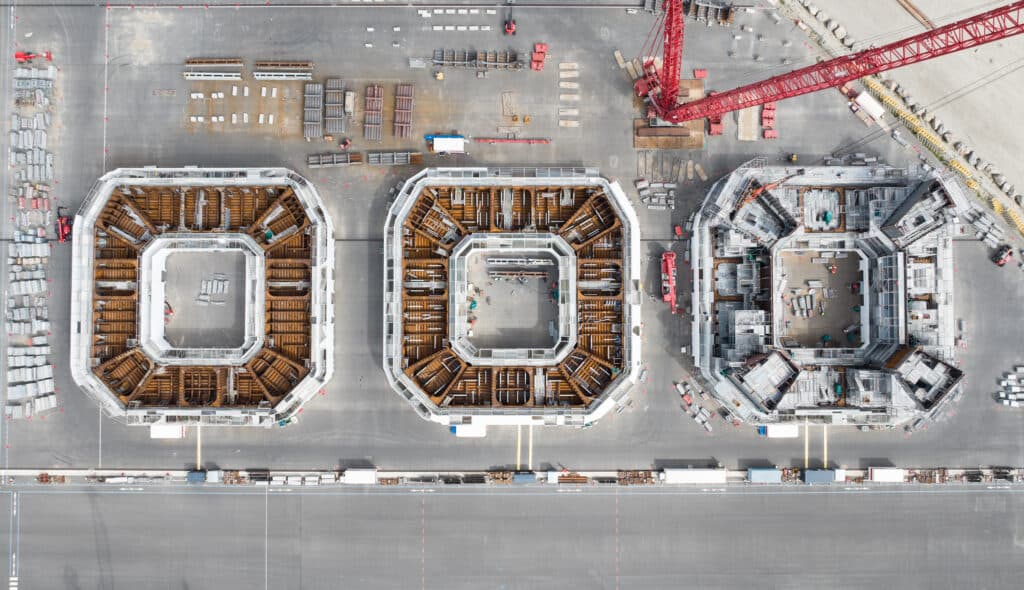
Eolmed Floating Offshore Wind Project – Photo Credit Qair
The report developed seven UK-based floating wind scenarios, within the Celtic Sea, the North Sea and East of Shetland, covering various floating substructure technologies, and representing commercial scale projects, with data contributed by turbine OEMs, substructure designers, developers, ports, insurers and government.
Luke Clark, Head of Floating and Deepwater Wind at RenewableUK, said: “Floating offshore wind represents a £47 billion economic opportunity for the UK by 2050, and maximising the UK’s potential to manufacture key components will give us a first-mover advantage in domestic and global markets.
“Cost reduction through standardisation of components will result in economies of scale and enable floating offshore wind to prove itself commercially. This new report identifies a wide range of cost reduction factors and makes clear that delivering a consistent pipeline of new projects is vital to secure the early investment we need to capture this vast opportunity. Floating wind offers growth and employment potential across the UK in places like Port Talbot and Aberdeen, which are being redeveloped as floating wind hubs, to support the energy transition.”
Colin Palmer, Director of Policy – Onshore & Offshore Delivery at Scottish Renewables, added: “Floating offshore wind offers a major opportunity to build on Scotland’s offshore expertise, creating jobs and industrial growth across our ports and supply chain while supporting the North Sea transition. This report provides a valuable framework for understanding how costs can come down through proven designs, standardised components and increased manufacturing capacity. Getting early projects built is the essential next step.
“A sustained programme of construction will give ports and suppliers the confidence to invest in facilities, equipment and skilled workers. Timely, joined-up decisions on consenting and grid are vital to turn Scotland’s substantial pipeline into operational projects that strengthen our energy security.”
The project was led by ORE Catapult and funded by the Floating Offshore Wind Centre of Excellence, and the Floating Wind Executive (FLOWEX).
The next phase of the work will deliver a Cost Reduction Monitoring Framework (CRMF) capable of supporting the UK’s ambitions for floating offshore wind – monitoring progress, informing investment, guiding intervention, and charting a course toward a competitive and scalable floating wind industry.